Fever is one of the most common health concerns parents face. When a child’s temperature suddenly rises—especially in the middle of the night—it can cause panic and leave parents wondering, “What should I do now?” In reality, fever is usually a natural and often helpful sign that the immune system is doing its job.
In this article, we’ll walk you through everything you need to know—why fevers occur, what temperatures are considered normal, how to safely manage fever at home, when medications are appropriate, common mistakes to avoid, and the red flags that mean it’s time to see a doctor.
- What Is Normal Body Temperature in Children? When Do We Call It a Fever?
- Most Common Causes of Fever in Children
- Main Symptoms of Fever
- Home Fever-Reducing Methods
- Do not overdress your child
- Lukewarm Bath and Compress Techniques
- Hydration and Nutrition Tips
- When Should Fever-Reducing Medications Be Used?
- Alternating medications?
- Common Fever-Related Mistakes at Home
- When Should You See a Doctor?
- Approach to Recurrent Fevers
- Conclusion: Fever is a Symptom, it is not a Disease
What Is Normal Body Temperature in Children? When Do We Call It a Fever?
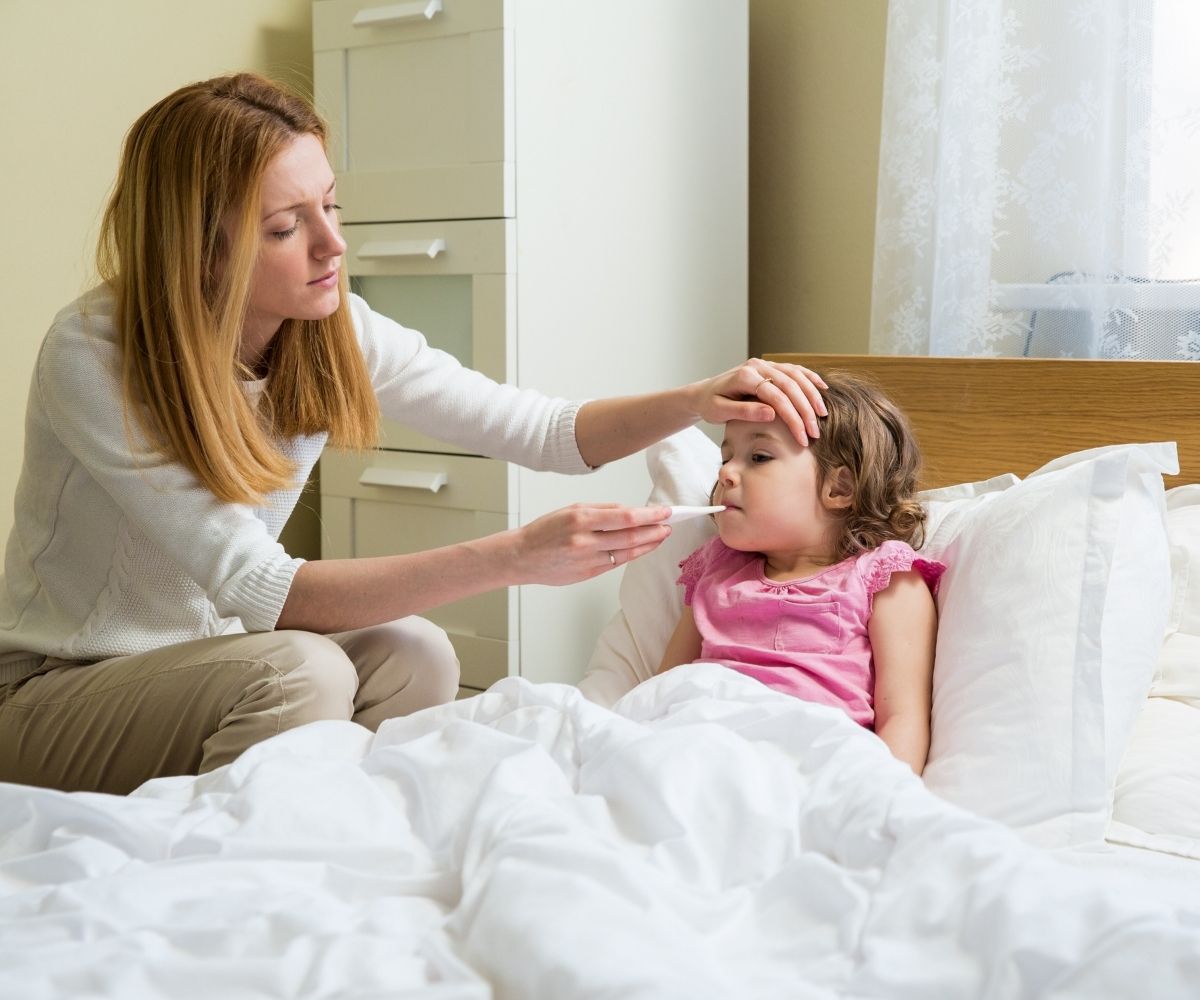
Accurately interpreting a child’s temperature starts with how it’s measured. Normal values vary based on the measurement site.
Normal body temperature ranges:
- Axillary (armpit): 36.5–37.2°C (97.7–99.0°F)
- Oral: 36.8–37.5°C (98.2–99.5°F)
- Rectal: 37.0–37.8°C (98.6–100.0°F)
- Ear (tympanic): 36.8–37.8°C (98.2–100.0°F)
- Forehead / skin infrared: 36.0–37.4°C (96.8–99.3°F)
Any reading above these limits is considered fever.
Commonly accepted thresholds:
- Above 37.5°C: Low-grade fever
- Above 38.0°C: Fever
- 39.0°C and above: High fever
A key reminder for parents:
👉 The thermometer reading alone doesn’t tell you how serious the illness is.
Some children act completely fine at 39°C, while others feel miserable at 38°C. Your child’s overall behavior is always more informative than the exact number.
Most Common Causes of Fever in Children
Fever can develop for many reasons, but the following are the most common:
-
Viral Infections
Responsible for 70–80% of fevers in childhood. These include:
- Common colds
- Influenza infections (flu)
- Upper respiratory infections
- Gastroenteritis
- Roseola (sixth disease)
Viral fevers often appear suddenly, last 2–3 days, and resolve on their own.
-
Bacterial Infections
Less common but require medical evaluation and treatment.
- Ear infections
- Pneumonia
- Urinary tract infections
- Tonsillitis
- Skin infections
These typically cause higher, more persistent fevers.
-
Vaccine-Related Fever
A mild fever within 24–72 hours after a vaccine—especially Pentavalent (DTaP-IPV-Hib) vaccine or pneumococcal vaccines—is normal and expected.
-
Teething
Teething does not cause high fever.
It may cause a slight rise up to around 37.5°C, but anything higher suggests another cause.
-
Overheating / Heat Exposure
Overdressing, warm environments, or excessive sun exposure may create fever-like symptoms.
-
Rheumatologic or Metabolic Conditions
Less common, but considered when fevers are prolonged or recurrent.
Main Symptoms of Fever
Each child may experience fever differently. Common symptoms include:
- Flushed cheeks
- Irritability
- Sleepiness or fatigue
- Decreased appetite
- Sweating or chills
- Fast breathing
- Increased heart rate
- Headache
- General body aches
- Signs of dehydration
In younger babies, unexplained fussiness may be the only symptom.
Home Fever-Reducing Methods
Before trying to lower the temperature, observe your child’s overall condition. Most fevers can be safely managed at home if your child:
- Is drinking fluids
- Is breathing comfortably
- Responds normally to you
- Fussier than normal but still interacts
Here are the safest, evidence-based methods:
Do not overdress your child
Undress your child and leave them only in their underwear or in one thin layer of clothes.
Lukewarm Bath and Compress Techniques
A common mistake is using ice-cold water, alcohol, or vinegar, which can be dangerous and actually worsen the fever.
The safest approach:
- Give your child a lukewarm bath (not hot, not cold).
- Water should be around 29–32°C (84–90°F).
- After the bath, gently pat them dry—avoid heavy towels that trap heat. Evaporation naturally helps reduce body temperature.
Lukewarm compress method:
- Apply lukewarm water-soaked cloths to the forehead, underarms, and groin area.
- Replace the cloths frequently to keep them lukewarm—not cold.
Hydration and Nutrition Tips
Fever increases fluid loss, so hydration is essential.
Best fluids include:
- Water
- Breast milk
- Oral rehydration solutions
- Mild, broth-based soups
Children with fever often lose interest in food. Don’t force them to eat. Offer gentle, easy-to-digest choices which they like:
- Yogurt
- Banana
- Plain rice or pasta
- Vegetable soup
Avoid sugary, fried, or heavy foods.
When Should Fever-Reducing Medications Be Used?
The goal is comfort—not necessarily reducing the number to normal.
Medications may be helpful when:
- Your child is uncomfortable or irritable
- Cannot sleep
- Has body aches
- Fever is above 38.5°C (101.3°F)
Common fever reducers:
- Acetaminophen (Paracetamol)
- Ibuprofen (for children older than 6 months)
Aspirin must never be given to children except in very specific medical cases due to the risk of Reye syndrome.
Dosing:
Doses must always be based on your child’s weight and overall health.
Never give medication because it “worked for someone else’s child.”
For your child’s safety, always let your physician decide on the appropriate dosage.
Alternating medications?
Acetaminophen and ibuprofen should not be alternated unless your pediatrician instructs you to do so.
Common Fever-Related Mistakes at Home
Some frequently seen (and potentially harmful) mistakes include:
❌ 1. Ice-cold baths
Trigger shivering and may raise body temperature further.
❌ 2. Alcohol or vinegar compresses
Can irritate the skin and cause respiratory problems.
❌ 3. Overdressing the child
Traps body heat.
❌ 4. Incorrect thermometer use
Ear thermometers may be inaccurate if a child is congested.
❌ 5. Delaying medical care
Especially risky for babies.
❌ 6. Unnecessary antibiotics
Antibiotics treat bacteria, not fever itself.
When Should You See a Doctor?
Seek urgent medical evaluation if your child has:
➡️ Fever of 38°C (100.4°F) or higher in babies under 6 months
➡️ Fever lasting more than 3 days
➡️ Extreme fatigue or difficulty waking
➡️ Fast or labored breathing
➡️ A seizure
➡️ Rash, purple spots, or petechiae
➡️ Stiff neck or severe headache
➡️ Vomiting, diarrhea, or inability to drink fluids
➡️ Painful urination or foul-smelling urine
➡️ Constant crying or moaning
Parents know their children best. If your instincts tell you something is wrong, trust that feeling and reach out to a healthcare provider.
Approach to Recurrent Fevers
Many children—especially those in daycare—experience repeated fevers. This does not automatically indicate a weak immune system.
Your pediatrician may suggest the following:
-
Keeping a fever diary
- Temperature level
- Duration
- Accompanying symptoms
-
Identifying common triggers
- Daycare or school exposure
- Seasonal viruses
- Allergies
- Iron deficiency
- Exposure to cigarette smoke
-
Supporting the immune system
- Consistent sleep routines
- Balanced nutrition
- Adequate vitamin D
- Good hand hygiene
- Healthy social interaction
-
Blood tests, if needed
To check for conditions like iron or zinc deficiency or certain immune markers.
Conclusion: Fever is a Symptom, it is not a Disease
Fever is often a natural response that shows the body is fighting an infection. With accurate information and calm, confident management, parents can safely handle many fever episodes at home.
Still, your child’s overall condition, symptoms, and age are key in determining when a fever needs medical attention. When in doubt, always reach out to your pediatrician.